30 YEARS ADE: Our history as told by Gary Smith – Part One
ADE's raison d'être
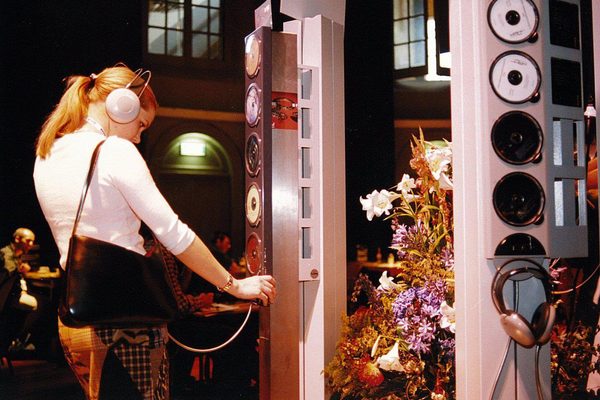
From its earliest days, ADE has simultaneously been a platform for the music and musicians filling dance floors around the world. ADE is a place where next-gen stars are mentored, empowered, and guided towards a career in music. This combination of respect for the people making our 'now' just that bit better, allied with a recognition of the mountain that every young musician or future label head is going to have to climb, lies at the core of ADE's raison d'être.
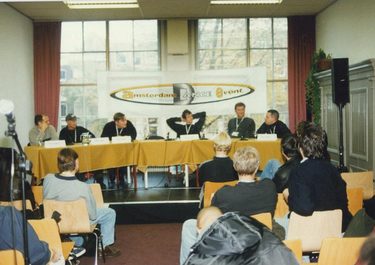
Step forward John de Mol Sr. At the time, he was running Conamus, a Dutch non-profit foundation founded in 1962 to support, promote, and export Dutch popular and light music. It changed its name to Buma Cultuur in 2006, run by Frank Helmink. De Mol agreed to support the first edition of ADE after much lobbying by Maria Jimenez and Peter Schmidt, the latter also being the founder of Eurosonic Noorderslag (ESNS). At the start of a meeting in Hilversum to nail down various final details, he looked at us and said the immortal words: 'But it’s just not music, – dance music – is it, really?!'
1996 was, after all, the year that electronic music was embraced by mainstream tastes and also the point at which it became the dominant sound of the charts.
ADE's raison d'être
From its earliest days, ADE has simultaneously been a platform for the music and musicians filling dance floors around the world. ADE is a place where next-gen stars are mentored, empowered, and guided towards a career in music. This combination of respect for the people making our 'now' just that bit better, allied with a recognition of the mountain that every young musician or future label head is going to have to climb, lies at the core of ADE's raison d'être.
Step forward John de Mol Sr. At the time, he was running Conamus, a Dutch non-profit foundation founded in 1962 to support, promote, and export Dutch popular and light music. It changed its name to Buma Cultuur in 2006, run by Frank Helmink. De Mol agreed to support the first edition of ADE after much lobbying by Maria Jimenez and Peter Schmidt, the latter also being the founder of Eurosonic Noorderslag (ESNS). At the start of a meeting in Hilversum to nail down various final details, he looked at us and said the immortal words: 'But it’s just not music, – dance music – is it, really?!'
1996 was, after all, the year that electronic music was embraced by mainstream tastes and also the point at which it became the dominant sound of the charts.

Brick-sized telephones & endless chats
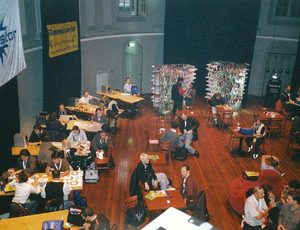
In terms of its main venue, ADE these days is indelibly associated with the charming, vertiginous Felix Meritis on the Keizersgracht. Having started out in De Balie on a total budget of 60.000 Guilders (€28,000 nowadays) – the bar still exists and sits right on Leidseplein in the center of Amsterdam – is also the place where the tradition of informal meetings outside the main entrance started.
That phenomenon was all down to the weakness of the mobile network signal in 1996 and the thickness of De Balie’s walls. This meant that delegates and their house brick-sized telephones were unable to get a signal inside, and went outdoors to make a call, then that small crowd of people making calls were joined by other delegates looking to network, which became a crowd of people doing what they do.
And it’s a habit that continues to this day, with the section of Keizersgracht that runs past the Felix Meritis now blocked to traffic during ADE to allow Pro Pass Holders to network without fear of being run over.
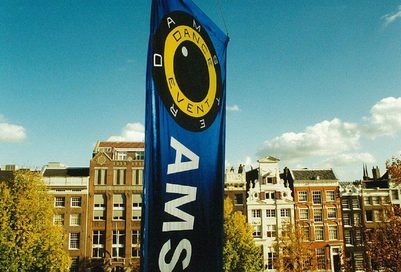
Behind ADE’s current status as a global brand lies a legacy laid down by the hundreds of dedicated and talented people who have given their all to make ADE what it is today. Everything the event is now was down to a degree of fearlessness, a whole heap of passion and dedication, and that magical, intangible thing of being in the right place at the right time.

Brick-sized telephones & endless chats
In terms of its main venue, ADE these days is indelibly associated with the charming, vertiginous Felix Meritis on the Keizersgracht. Having started out in De Balie on a total budget of 60.000 Guilders (€28,000 nowadays) – the bar still exists and sits right on Leidseplein in the center of Amsterdam – is also the place where the tradition of informal meetings outside the main entrance started.
That phenomenon was all down to the weakness of the mobile network signal in 1996 and the thickness of De Balie’s walls. This meant that delegates and their house brick-sized telephones were unable to get a signal inside, and went outdoors to make a call, then that small crowd of people making calls were joined by other delegates looking to network, which became a crowd of people doing what they do.
And it’s a habit that continues to this day, with the section of Keizersgracht that runs past the Felix Meritis now blocked to traffic during ADE to allow Pro Pass Holders to network without fear of being run over.
Behind ADE’s current status as a global brand lies a legacy laid down by the hundreds of dedicated and talented people who have given their all to make ADE what it is today. Everything the event is now was down to a degree of fearlessness, a whole heap of passion and dedication, and that magical, intangible thing of being in the right place at the right time.
Read more in part two, coming soon!
Browse our ADE 30 YEARS Festival page