30 YEARS ADE Iconic Venues – Club RAUM: 'The club is only finished when we close the doors for the last time'
by Meike Jentjens
"Queerness, for us, is not an object of fixation but an essence in perpetual movement that defies rigid definitions and resists oppressive systems that are imposed on us. We strive to be a space where unity is essential and curiosity thrives; where acceptance and growth intertwine"
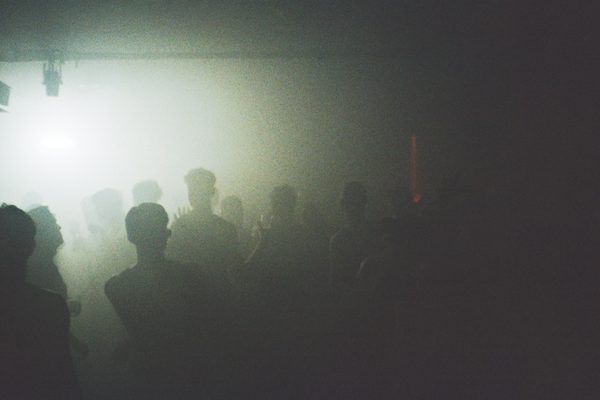
Club RAUM shall never be completed; it will always be in movement.
As Club RAUM's mission statement says: the space shall never be completed. Sven Bijma, co-owner with Diego Meijers, explains how the continual movement of RAUM starts with intentionality. Not at all with trying to be different, he is quick to point out, but with questioning why things are done the way they are, from the artists on the programme to the physical space they perform in. ‘We are not trying very hard to be unique,’ he says, which ironically makes RAUM very unique. ‘It has more to do with intentionality. We think carefully about everything we do, from the programme to the physical space.’
When asked what the collective wants to leave behind as a legacy, Bijma initially dismisses the idea as a little too grand, or ‘grotesque’, as he puts it. Club RAUM was never created with the ambition of becoming an institution. ‘I hope we might change the way people see how a club can exist,’ he eventually says. More immediately, his hopes are closer to home. ‘I hope people feel that they were taken care of. That they learned something new, or felt something, and that they felt part of the club.’
That sense of care runs through Club RAUM in ways that are both visible and deliberately less so. The club particularly fosters the LGBTQIA+ community, with its door policy, perceived as strict by some, awareness team, no-photography policy and emphasis on affirmative consent creating the conditions in which people can move more freely once inside. What might look like a set of restrictions from the outside serves a different purpose once through the doors: protecting the freedom to dance, play and exist without becoming someone else's object of curiosity. Its code of conduct is even designed to change along with the club itself, acknowledging from the outset that creating a safer space requires listening, learning and occasionally admitting that something could be done better.
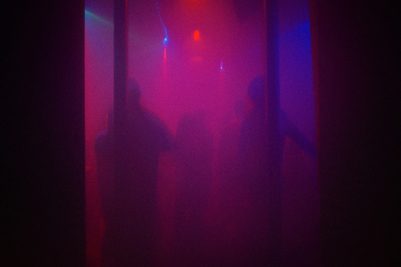
Club RAUM shall never be completed; it will always be in movement.
As Club RAUM's mission statement says: the space shall never be completed. Sven Bijma, co-owner with Diego Meijers, explains how the continual movement of RAUM starts with intentionality. Not at all with trying to be different, he is quick to point out, but with questioning why things are done the way they are, from the artists on the programme to the physical space they perform in. ‘We are not trying very hard to be unique,’ he says, which ironically makes RAUM very unique. ‘It has more to do with intentionality. We think carefully about everything we do, from the programme to the physical space.’
When asked what the collective wants to leave behind as a legacy, Bijma initially dismisses the idea as a little too grand, or ‘grotesque’, as he puts it. Club RAUM was never created with the ambition of becoming an institution. ‘I hope we might change the way people see how a club can exist,’ he eventually says. More immediately, his hopes are closer to home. ‘I hope people feel that they were taken care of. That they learned something new, or felt something, and that they felt part of the club.’
That sense of care runs through Club RAUM in ways that are both visible and deliberately less so. The club particularly fosters the LGBTQIA+ community, with its door policy, perceived as strict by some, awareness team, no-photography policy and emphasis on affirmative consent creating the conditions in which people can move more freely once inside. What might look like a set of restrictions from the outside serves a different purpose once through the doors: protecting the freedom to dance, play and exist without becoming someone else's object of curiosity. Its code of conduct is even designed to change along with the club itself, acknowledging from the outset that creating a safer space requires listening, learning and occasionally admitting that something could be done better.
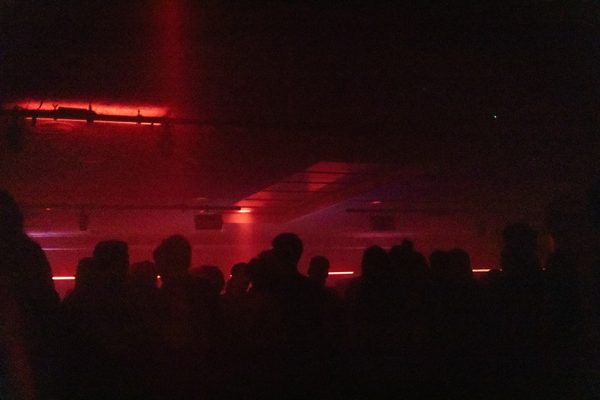
The same willingness to reconsider things applies to the building. When Club RAUM opened in 2024, Studio occupied the upper floor while Expo served as the second dance floor downstairs. It didn't take particularly long for the team to realise the latter wasn't quite doing what they wanted it to do. Expo was relatively compact and, in its layout, felt too similar to Studio. So, in rather fitting Club RAUM fashion, they decided to change it.
‘Together with our architects, we have this idea of what the club should be, but when we see that something doesn't work, we change it,’ Bijma says. Rather than disguising that first iteration as part of some elaborate master plan, he is refreshingly straightforward about it: Expo simply wasn't the ideal dance floor. What it did do was make much clearer what was still missing.
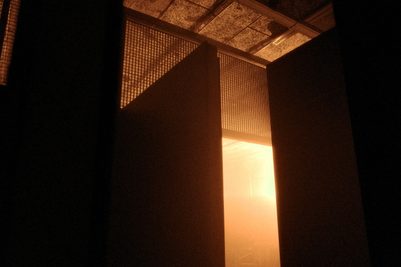
The same willingness to reconsider things applies to the building. When Club RAUM opened in 2024, Studio occupied the upper floor while Expo served as the second dance floor downstairs. It didn't take particularly long for the team to realise the latter wasn't quite doing what they wanted it to do. Expo was relatively compact and, in its layout, felt too similar to Studio. So, in rather fitting Club RAUM fashion, they decided to change it.
‘Together with our architects, we have this idea of what the club should be, but when we see that something doesn't work, we change it,’ Bijma says. Rather than disguising that first iteration as part of some elaborate master plan, he is refreshingly straightforward about it: Expo simply wasn't the ideal dance floor. What it did do was make much clearer what was still missing.
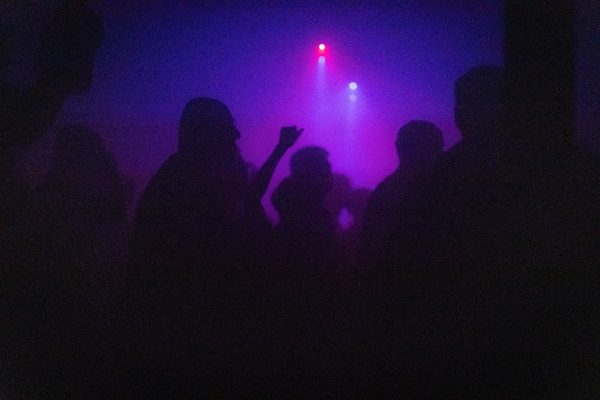
The answer is Nexus, designed as a darker, more immersive counterpart to Studio, developed by architects Joaquin Valdes and Bram van Grinsven together with audiovisual artists Ben Kreukniet and Albert van Abbe. With more volume, greater verticality and an emphasis on shifting shadows and harder sounds, the new room gives Club RAUM something its two original spaces could not. A bespoke Funktion-One sound system designed by Chrissie Quast will take care of the obvious priority, while a new lighting and scenography concept extends beyond Nexus and across the club as a whole.
‘We don't want to connect one genre or musical style to one specific room,’ Bijma explains. Studio can move between house, electro, trance and techno, while Nexus creates a different set of possibilities rather than prescribing what should happen inside it. ‘We knew we needed a counterpart.’
Nexus comes with its own bar and toilets, connected by passageways and alleyways designed to get lost in. What happens once people find the dance floor is deliberately left more open. For all the thought that goes into Club RAUM, the team cannot, and emphasis it doesn't want, control everything that happens inside it. The architecture can create possibilities, the programme can bring people together, and the club's policies can establish the boundaries that make freedom possible, but eventually the room belongs to the people using it.
Moving without losing yourself
Of course, continual movement sounds lovely in a mission statement. Running a club in 2026 also means getting people through the door. Bijma is open about that reality, especially at a time when clubs are struggling. ‘You have to be very conscious of what kind of music you programme,’ he says. ‘You need to find a balance between what you know works and staying close to yourself. That balance is really difficult.’
For now, that balancing act continues with another room to fill. Nexus opens during the SPIELRAUM Weekender on 11 and 12 September, before getting its first ADE workout in October, and from there, it's back to watching, learning and inevitably changing things again. ‘The club is only finished when we close the doors for the last time,’ Bijma says.
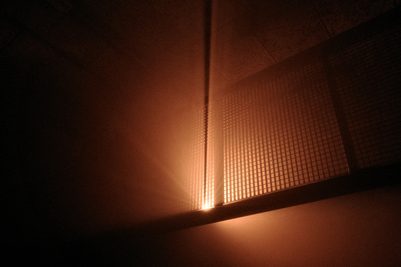
The answer is Nexus, designed as a darker, more immersive counterpart to Studio, developed by architects Joaquin Valdes and Bram van Grinsven together with audiovisual artists Ben Kreukniet and Albert van Abbe. With more volume, greater verticality and an emphasis on shifting shadows and harder sounds, the new room gives Club RAUM something its two original spaces could not. A bespoke Funktion-One sound system designed by Chrissie Quast will take care of the obvious priority, while a new lighting and scenography concept extends beyond Nexus and across the club as a whole.
‘We don't want to connect one genre or musical style to one specific room,’ Bijma explains. Studio can move between house, electro, trance and techno, while Nexus creates a different set of possibilities rather than prescribing what should happen inside it. ‘We knew we needed a counterpart.’
Nexus comes with its own bar and toilets, connected by passageways and alleyways designed to get lost in. What happens once people find the dance floor is deliberately left more open. For all the thought that goes into Club RAUM, the team cannot, and emphasis it doesn't want, control everything that happens inside it. The architecture can create possibilities, the programme can bring people together, and the club's policies can establish the boundaries that make freedom possible, but eventually the room belongs to the people using it.
Moving without losing yourself
Of course, continual movement sounds lovely in a mission statement. Running a club in 2026 also means getting people through the door. Bijma is open about that reality, especially at a time when clubs are struggling. ‘You have to be very conscious of what kind of music you programme,’ he says. ‘You need to find a balance between what you know works and staying close to yourself. That balance is really difficult.’
For now, that balancing act continues with another room to fill. Nexus opens during the SPIELRAUM Weekender on 11 and 12 September, before getting its first ADE workout in October, and from there, it's back to watching, learning and inevitably changing things again. ‘The club is only finished when we close the doors for the last time,’ Bijma says.