30 YEARS ADE: Iconic Venues – 40 years of Escape
by Meike Jentjens
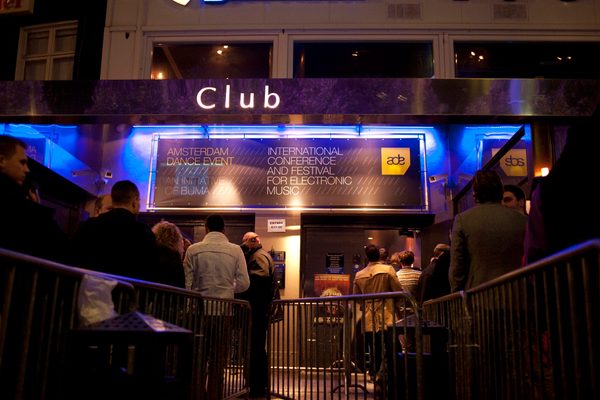
How do you run a nightclub for forty years in an industry that reinvents itself every weekend? "A club night comes and goes."
The thought of running a nightclub for forty years may sound romantic, or as a life goal. The reality of Amsterdam is actually that we see clubs come and go, people change, and some venues shutting their doors for good. Forty years is long enough for entire genres to come up and disappear, repeat that cycle, and then long enough for Amsterdam itself becoming a completely new city with new inhabitants. Yet while that cycle of electronic music kept spinning and nightlife continued its endless search for the next thing, Escape simply remained part of Amsterdam. Guess how? The team stayed consistent, while reinventing at the same time..
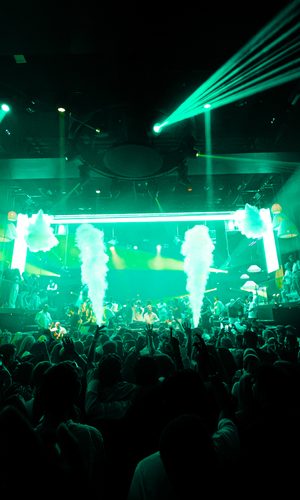
If you ask co-owner Darwin Poppes what forty years of Escape looks like, his answer has nothing to do with nostalgia. Instead, he talks about what's new in the club. Replacing bars, upgrading lighting systems, and constantly looking at what the club needs next. 'We're always investing in Escape', he says. Be it financially, energy-wise, or just by researching clubs in Ibiza, finding that spark back for the best club nights. 'Two years ago we rebuilt all the bars. Now we've installed a new LED centerpiece. You can't stop improving the product.'
The word product sounds surprisingly matter-of-fact for someone whose family has run for decades, and become synonymous with one of Amsterdam's best-known clubs, but perhaps that's exactly why Escape is still here. Escape opened in 1986, founded by twin brothers Dick and Ton Poppes. Nearly four decades later, it remains in family hands, and if we may believe Darwin Poppes, it always will. The transition from one generation to the next happened gradually, Poppes explains, without dramatic handovers or massive changes in direction. 'Nobody was in a hurry to leave or take over. It wasn't something that happened overnight.' He adds he was ready for this all his life, jokingly, but not jokingly.
Escape also belongs to a relatively small group of venues that have grown up alongside Amsterdam Dance Event itself.
When ADE first took shape in the mid-nineties, electronic music occupied a very different place in both Amsterdam and the wider cultural landscape. What started as a relatively modest gathering gradually evolved into the world's leading festival and conference for electronic music. Escape was there before that transformation began and has remained part of it ever since. Darwin Poppes' steady approach to not change too much seems to run through in his philosophy. 'A club night comes and a club night goes,' Darwin Poppes says with a shrug. 'Then you move on to the next thing. And there's always a tomorrow.' Especially at Escape Amsterdam, being open for seven days a week. And if there's one group of people who know about the opening hours, it's tourists.
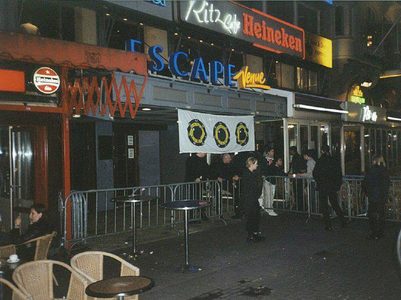
How do you run a nightclub for forty years in an industry that reinvents itself every weekend? "A club night comes and goes."
The thought of running a nightclub for forty years may sound romantic, or as a life goal. The reality of Amsterdam is actually that we see clubs come and go, people change, and some venues shutting their doors for good. Forty years is long enough for entire genres to come up and disappear, repeat that cycle, and then long enough for Amsterdam itself becoming a completely new city with new inhabitants. Yet while that cycle of electronic music kept spinning and nightlife continued its endless search for the next thing, Escape simply remained part of Amsterdam. Guess how? The team stayed consistent, while reinventing at the same time..
If you ask co-owner Darwin Poppes what forty years of Escape looks like, his answer has nothing to do with nostalgia. Instead, he talks about what's new in the club. Replacing bars, upgrading lighting systems, and constantly looking at what the club needs next. 'We're always investing in Escape', he says. Be it financially, energy-wise, or just by researching clubs in Ibiza, finding that spark back for the best club nights. 'Two years ago we rebuilt all the bars. Now we've installed a new LED centerpiece. You can't stop improving the product.'
The word product sounds surprisingly matter-of-fact for someone whose family has run for decades, and become synonymous with one of Amsterdam's best-known clubs, but perhaps that's exactly why Escape is still here. Escape opened in 1986, founded by twin brothers Dick and Ton Poppes. Nearly four decades later, it remains in family hands, and if we may believe Darwin Poppes, it always will. The transition from one generation to the next happened gradually, Poppes explains, without dramatic handovers or massive changes in direction. 'Nobody was in a hurry to leave or take over. It wasn't something that happened overnight.' He adds he was ready for this all his life, jokingly, but not jokingly.
Escape also belongs to a relatively small group of venues that have grown up alongside Amsterdam Dance Event itself.
When ADE first took shape in the mid-nineties, electronic music occupied a very different place in both Amsterdam and the wider cultural landscape. What started as a relatively modest gathering gradually evolved into the world's leading festival and conference for electronic music. Escape was there before that transformation began and has remained part of it ever since. Darwin Poppes' steady approach to not change too much seems to run through in his philosophy. 'A club night comes and a club night goes,' Darwin Poppes says with a shrug. 'Then you move on to the next thing. And there's always a tomorrow.' Especially at Escape Amsterdam, being open for seven days a week. And if there's one group of people who know about the opening hours, it's tourists.
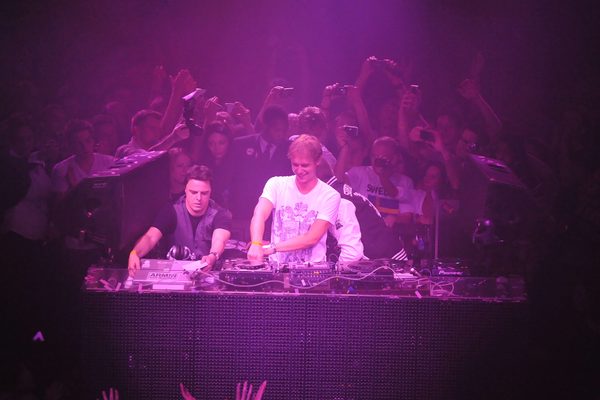
Everybody has an opinion
Forty years on Rembrandtplein, and people will inevitably have something to say about your club. Escape has been called commercial, touristy, mainstream, too big, and not underground enough for a club. That's okay, if it's up to the team behind Escape. I mean, they do have the biggest LED screen in the entirety of The Netherlands hanging on their actual front door. 'You can't expect to stay the hottest club among local crowds forever,' Darwin says. 'That's impossible. People move from venue to venue. And we've been here for a while.'
Tourists make up a significant part of Escape's audience, a reality the club openly acknowledges (look at the massive banners at Schiphol Airport), while at the same time continuing to invest in attracting Dutch visitors through its own programming and resident nights. Rather than chasing every new trend, Escape has always focused on understanding the audience walking through the door. It's not that they don't want to welcome Amsterdammers, Escape just opens its doors, and hopes they will find their way back to the club. Because, why actually not? The team still asks itself this question.
House is the foundation
That responsibility largely falls to General Manager Pel van Zijderveld, who oversees much of the club's programming, look, and feel together with his team. Ask him what makes a good club night, and he'll tell you it's all about passion. 'We live nightlife. Every day we're thinking about which music, trends, and vibes people are looking for.'
Escape continues to work with many of the same residents, dancers, musicians and performers over long periods of time (here's the family approach again!), creating a recognisable identity that evolves without constantly reinventing itself. House remains the foundation, but the programme shifts throughout the ADE week, reflecting different audiences and different expectations. 'We've learned that seven days of house music simply doesn't work,' Van Zijderveld laughs. 'Variation is important, even if I personally don't want it.'
Every October, that philosophy is tested all over again. For a club that's open every day of the year, ADE is both business as usual and something entirely different. 'It's one of the busiest weeks of the year,' says Van Zijderveld. 'You're programming for an audience that has come from all over the world, while staying true to what Escape is.' And what that exactly is? Well, this year, Escape will book big artists to celebrate their fortieth anniversary – iconic line-ups that show that Escape knows exactly who they are.
Like any club, Escape only becomes Escape once the doors open. The artists, the dancers, even the spectators returning every weekend and the people visiting for the very first time are the ones who shape its identity. They create the atmosphere. Escape will do what it has quietly done since the very beginning: open its doors, and let the room decide the flow.
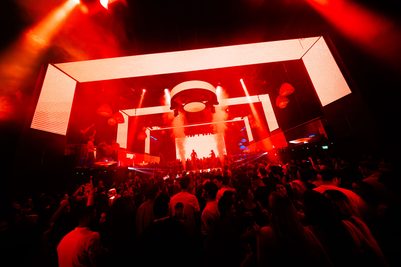
Everybody has an opinion
Forty years on Rembrandtplein, and people will inevitably have something to say about your club. Escape has been called commercial, touristy, mainstream, too big, and not underground enough for a club. That's okay, if it's up to the team behind Escape. I mean, they do have the biggest LED screen in the entirety of The Netherlands hanging on their actual front door. 'You can't expect to stay the hottest club among local crowds forever,' Darwin says. 'That's impossible. People move from venue to venue. And we've been here for a while.'
Tourists make up a significant part of Escape's audience, a reality the club openly acknowledges (look at the massive banners at Schiphol Airport), while at the same time continuing to invest in attracting Dutch visitors through its own programming and resident nights. Rather than chasing every new trend, Escape has always focused on understanding the audience walking through the door. It's not that they don't want to welcome Amsterdammers, Escape just opens its doors, and hopes they will find their way back to the club. Because, why actually not? The team still asks itself this question.
House is the foundation
That responsibility largely falls to General Manager Pel van Zijderveld, who oversees much of the club's programming, look, and feel together with his team. Ask him what makes a good club night, and he'll tell you it's all about passion. 'We live nightlife. Every day we're thinking about which music, trends, and vibes people are looking for.'
Escape continues to work with many of the same residents, dancers, musicians and performers over long periods of time (here's the family approach again!), creating a recognisable identity that evolves without constantly reinventing itself. House remains the foundation, but the programme shifts throughout the ADE week, reflecting different audiences and different expectations. 'We've learned that seven days of house music simply doesn't work,' Van Zijderveld laughs. 'Variation is important, even if I personally don't want it.'
Every October, that philosophy is tested all over again. For a club that's open every day of the year, ADE is both business as usual and something entirely different. 'It's one of the busiest weeks of the year,' says Van Zijderveld. 'You're programming for an audience that has come from all over the world, while staying true to what Escape is.' And what that exactly is? Well, this year, Escape will book big artists to celebrate their fortieth anniversary – iconic line-ups that show that Escape knows exactly who they are.
Like any club, Escape only becomes Escape once the doors open. The artists, the dancers, even the spectators returning every weekend and the people visiting for the very first time are the ones who shape its identity. They create the atmosphere. Escape will do what it has quietly done since the very beginning: open its doors, and let the room decide the flow.