30 YEARS ADE: Iconic Venues – Gashouder
by Meike Jentjens
'Gashouder has a collective memory'
Few venues have been as closely tied to Amsterdam’s electronic music story as the Gashouder. Over the years, Gashouder has seen everything from landmark concerts and large-scale club nights to some of ADE’s most enduring traditions, including many memorable Awakenings nights. As musical genres kept moving in cycles, the building remained a constant presence within the city’s (cultural) landscape. Gashouder's continuity is part of what makes the venue so distinctive today. While Gashouder enters a new chapter with its return, new identity, and fresh club programming during 30 YEARS ADE, it also carries decades of memories accumulated by the people who passed through it.
‘We welcome people here who have been making memories for 30 years,’ says Mercedes Coco, Head of Brand & Partnerships at Gashouder.
‘I remember walking in and feeling the weight of the space immediately,’ she says. ‘Not because of what was happening there that day, but because you could feel that so much had happened there before. Someone might have had their first experience going out here back in the day and is now all grown up, while the person standing next to them is discovering the venue for the first time. That coexistence feels very special.’ The notion of a venue carrying memory surfaced repeatedly throughout conversations with the people responsible for its next chapter.
An icon reimagined
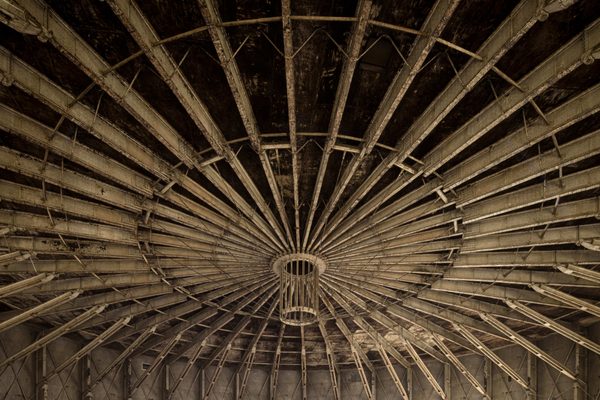
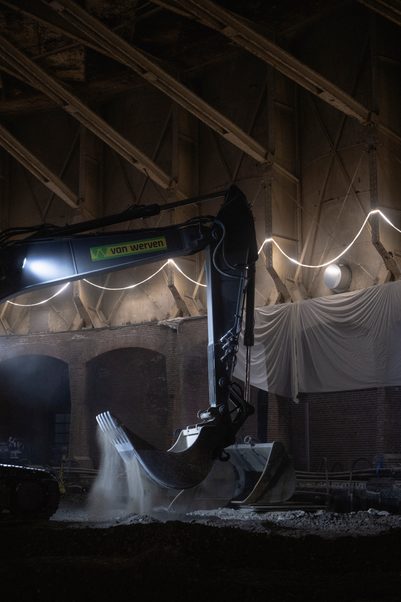
The venue reopens in November with its pre-opening season this June, following two years of structural renovations. The entire roof structure has been upgraded to significantly improve acoustics, while beneath the venue an entirely new basement level, the size of Gashouder itself, has been excavated. The new space will house the venue's entrance, lockers, artist facilities and green rooms, fundamentally changing how audiences and performers move through the building. The main hall has also been reimagined, creating new possibilities for staging and performance while preserving the industrial character that generations of visitors associate with the venue. The upgrade is intended to give artists and audiences new ways to experience the space itself, without losing its charming character.
‘Gashouder has a collective memory. You don’t have that with a black box venue. This space is cultural heritage,' says Mercedes Coco. That sense of continuity became central to the redevelopment process. The challenge was never simply how to modernise the venue, but how to do so without losing the emotional connection people have built with it over decades. ‘There are certain things you simply don't touch. There are memories attached to every part of this building.'
Gashouder's charm is already reflected in the first announced ADE events: Job Jobse immediately said yes to hosting an all-day event, and Josh Baker described Gashouder as ‘every DJ's dream to play’, as well as artists like Armin van Buuren, Benwal, Sammy Virji, Franky Rizardo, and Mochakk, who represent different corners of contemporary electronic music culture. Newly announced is a collaborative techno night (fitting for Gashouder) curated by I Hate Models and Nico Moreno, who will bring their worlds together inside Gashouder for the first time, joined by VÆMILIJA and Maudux.
The full lineup for these events will represent the breadth of electronic music as much as they do, as Gashouder says, and will be revealed soon.
'Gashouder has a collective memory'
Few venues have been as closely tied to Amsterdam’s electronic music story as the Gashouder. Over the years, Gashouder has seen everything from landmark concerts and large-scale club nights to some of ADE’s most enduring traditions, including many memorable Awakenings nights. As musical genres kept moving in cycles, the building remained a constant presence within the city’s (cultural) landscape. Gashouder's continuity is part of what makes the venue so distinctive today. While Gashouder enters a new chapter with its return, new identity, and fresh club programming during 30 YEARS ADE, it also carries decades of memories accumulated by the people who passed through it.
‘We welcome people here who have been making memories for 30 years,’ says Mercedes Coco, Head of Brand & Partnerships at Gashouder.
‘I remember walking in and feeling the weight of the space immediately,’ she says. ‘Not because of what was happening there that day, but because you could feel that so much had happened there before. Someone might have had their first experience going out here back in the day and is now all grown up, while the person standing next to them is discovering the venue for the first time. That coexistence feels very special.’ The notion of a venue carrying memory surfaced repeatedly throughout conversations with the people responsible for its next chapter.
An icon reimagined
The venue reopens in November with its pre-opening season this June, following two years of structural renovations. The entire roof structure has been upgraded to significantly improve acoustics, while beneath the venue an entirely new basement level, the size of Gashouder itself, has been excavated. The new space will house the venue's entrance, lockers, artist facilities and green rooms, fundamentally changing how audiences and performers move through the building. The main hall has also been reimagined, creating new possibilities for staging and performance while preserving the industrial character that generations of visitors associate with the venue. The upgrade is intended to give artists and audiences new ways to experience the space itself, without losing its charming character.
‘Gashouder has a collective memory. You don’t have that with a black box venue. This space is cultural heritage,' says Mercedes Coco. That sense of continuity became central to the redevelopment process. The challenge was never simply how to modernise the venue, but how to do so without losing the emotional connection people have built with it over decades. ‘There are certain things you simply don't touch. There are memories attached to every part of this building.'
Gashouder's charm is already reflected in the first announced ADE events: Job Jobse immediately said yes to hosting an all-day event, and Josh Baker described Gashouder as ‘every DJ's dream to play’, as well as artists like Armin van Buuren, Benwal, Sammy Virji, Franky Rizardo, and Mochakk, who represent different corners of contemporary electronic music culture. Newly announced is a collaborative techno night (fitting for Gashouder) curated by I Hate Models and Nico Moreno, who will bring their worlds together inside Gashouder for the first time, joined by VÆMILIJA and Maudux.
The full lineup for these events will represent the breadth of electronic music as much as they do, as Gashouder says, and will be revealed soon.
"How do you honour that history without letting it completely define the future?"
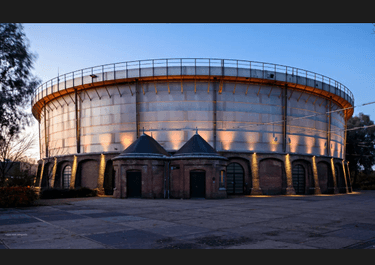
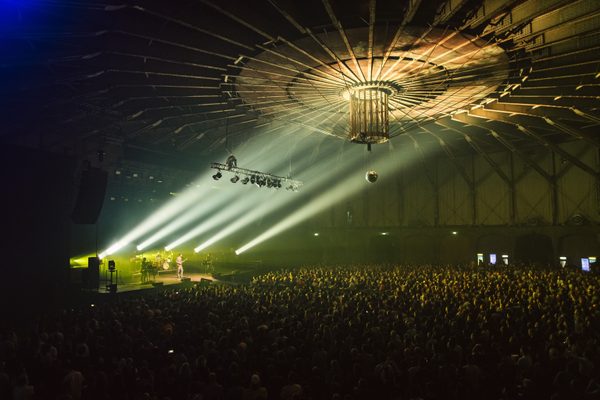
It's a question many of Amsterdam's cultural institutions are currently grappling with: how to remain relevant without losing the qualities that made them matter in the first place. Originally built in 1902 as part of the Westergasfabriek industrial complex, the circular structure gradually transformed from industrial infrastructure into one of the city's most recognisable cultural spaces.
Over time it became associated with landmark concerts like Underworld right before it's closing, large-scale electronic music events like Awakenings at ADE, and last year as ADE Lab Village's backdrop. As genres rose and fell in popularity, the venue stayed steady. Today, all of Gashouder's history forms the foundation for a broader new vision.
Alongside its return to club programming, Gashouder is expanding its focus across electronic music (dance), live music, art, and performance: a shift that reflects not only the ambitions of the venue itself, but also wider changes taking place within Amsterdam's cultural ecosystem. ‘We want to become a cultural anchor within the ring of Amsterdam,’ Boye ’t Lam, Managing Director of Gashouder, says. ‘A springboard between Paradiso or Melkweg and AFAS or Ziggo, while still remaining connected to the city itself.’ It is a perspective shaped by years spent moving through different corners of Amsterdam’s music landscape.
Throughout that time, 't Lam has witnessed how venues themselves influence culture, often as much as the artists performing inside them. As a venue, you fulfill an important gatekeeper role in what people get to see,’ he explains. When asked, when you stand alone in the empty venue, what comes to mind?, he answers: 'You realise how many people have stood here before you'.
That responsibility extends beyond programming established names. According to the team behind Gashouder Dance, consisting of Jam and Jali van der Valk together with Hisham Atta Alla, the goal is to build a venue that remains connected to the wider ecosystem of Amsterdam nightlife. ‘It’s not really about legendary names,’ they explain. ‘It’s about whether someone fits the scale, energy and identity of the room.’
"How do you honour that history without letting it completely define the future?"
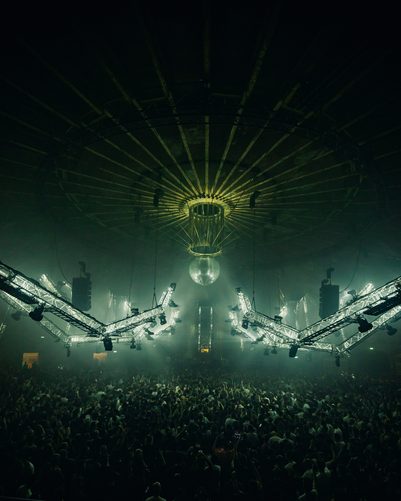
It's a question many of Amsterdam's cultural institutions are currently grappling with: how to remain relevant without losing the qualities that made them matter in the first place. Originally built in 1902 as part of the Westergasfabriek industrial complex, the circular structure gradually transformed from industrial infrastructure into one of the city's most recognisable cultural spaces.
Over time it became associated with landmark concerts like Underworld right before it's closing, large-scale electronic music events like Awakenings at ADE, and last year as ADE Lab Village's backdrop. As genres rose and fell in popularity, the venue stayed steady. Today, all of Gashouder's history forms the foundation for a broader new vision.
Alongside its return to club programming, Gashouder is expanding its focus across electronic music (dance), live music, art, and performance: a shift that reflects not only the ambitions of the venue itself, but also wider changes taking place within Amsterdam's cultural ecosystem. ‘We want to become a cultural anchor within the ring of Amsterdam,’ Boye ’t Lam, Managing Director of Gashouder, says. ‘A springboard between Paradiso or Melkweg and AFAS or Ziggo, while still remaining connected to the city itself.’ It is a perspective shaped by years spent moving through different corners of Amsterdam’s music landscape.
Throughout that time, 't Lam has witnessed how venues themselves influence culture, often as much as the artists performing inside them. As a venue, you fulfill an important gatekeeper role in what people get to see,’ he explains. When asked, when you stand alone in the empty venue, what comes to mind?, he answers: 'You realise how many people have stood here before you'.
That responsibility extends beyond programming established names. According to the team behind Gashouder Dance, consisting of Jam and Jali van der Valk together with Hisham Atta Alla, the goal is to build a venue that remains connected to the wider ecosystem of Amsterdam nightlife. ‘It’s not really about legendary names,’ they explain. ‘It’s about whether someone fits the scale, energy and identity of the room.’
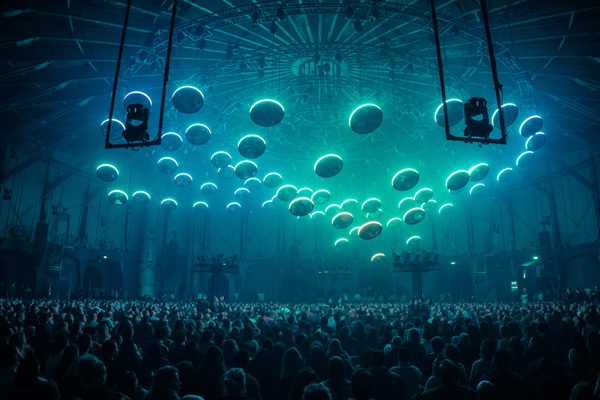
That sense of possibility is something the team hopes to build upon. ‘Artists are genuinely excited about coming back,’ the team explains. ‘There are many more possibilities now to rethink how a show can be presented inside the space.’
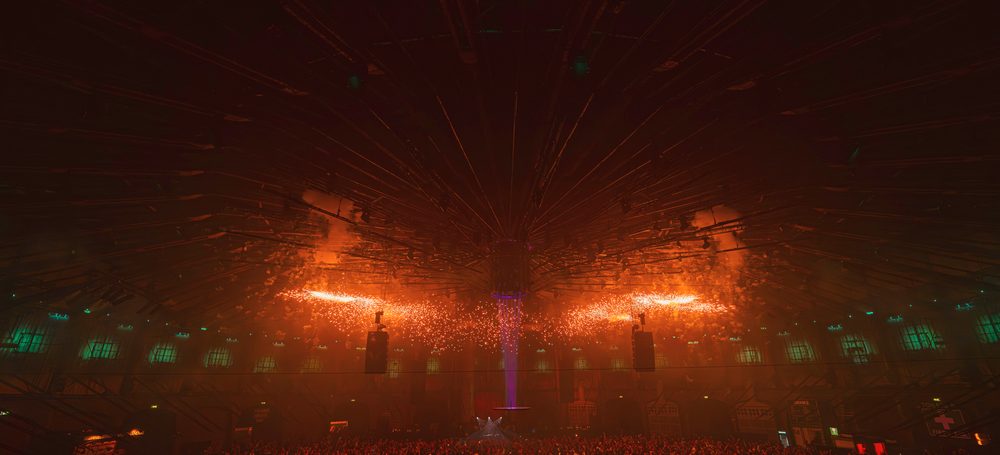
Even during large-scale shows, the building itself remains the star of the show, with 'energy going around, just like the gas did back in the days', as Mercedes Coco puts it. Steel structures, industrial details and circular architecture continue to interact with sound, light and movement inside the room. ‘You walk in and immediately feel overwhelmed in a good way,’ say programmers Jam and Jali van der Valk. ‘The building and the production almost melt together.’
The recent transformation was designed to strengthen that relationship between artist, audience and venue. The upgraded acoustics, new staging possibilities and redesigned audience flow allow each event to shape the room differently, rather than simply adapting to it. 'Rather than imposing a fixed format, the ambition is to give artists greater ownership over how they use the venue, allowing each show to respond to the building in its own way. The building already has such a strong identity,’ says Hisham Atta Alla. ‘What becomes interesting is seeing how different artists choose to interact with it. We hope artists and dancers alike see Gashouder as a fresh canvas.’
Another round
And maybe that's why Gashouder has remained so closely tied to ADE for so long? Not because of one artist, one event, or one particular era, but because generations of people continuously gave meaning to the space. As Gashouder opens its doors for 30 YEARS ADE, thousands of people will once again pass through them, responding to the space in their own way.
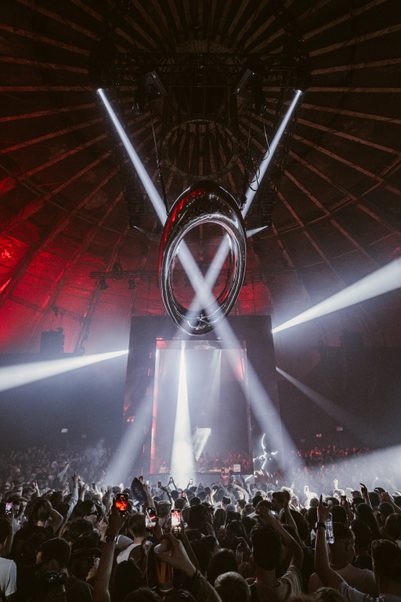
That sense of possibility is something the team hopes to build upon. ‘Artists are genuinely excited about coming back,’ the team explains. ‘There are many more possibilities now to rethink how a show can be presented inside the space.’
Even during large-scale shows, the building itself remains the star of the show, with 'energy going around, just like the gas did back in the days', as Mercedes Coco puts it. Steel structures, industrial details and circular architecture continue to interact with sound, light and movement inside the room. ‘You walk in and immediately feel overwhelmed in a good way,’ say programmers Jam and Jali van der Valk. ‘The building and the production almost melt together.’
The recent transformation was designed to strengthen that relationship between artist, audience and venue. The upgraded acoustics, new staging possibilities and redesigned audience flow allow each event to shape the room differently, rather than simply adapting to it. 'Rather than imposing a fixed format, the ambition is to give artists greater ownership over how they use the venue, allowing each show to respond to the building in its own way. The building already has such a strong identity,’ says Hisham Atta Alla. ‘What becomes interesting is seeing how different artists choose to interact with it. We hope artists and dancers alike see Gashouder as a fresh canvas.’
Another round
And maybe that's why Gashouder has remained so closely tied to ADE for so long? Not because of one artist, one event, or one particular era, but because generations of people continuously gave meaning to the space. As Gashouder opens its doors for 30 YEARS ADE, thousands of people will once again pass through them, responding to the space in their own way.